One of the challenges many educators face is helping students move beyond simply learning information and toward developing deeper understanding, empathy, and critical thinking.
This becomes especially important when students explore historical events, current issues, or complex social topics where different people may experience the same situation in very different ways.
Yet perspective-taking is often assumed rather than explicitly taught.
We may ask students:
- “What do you think?”
- “How would the other person feel?”
- “Why do people disagree?”
But students are not always taught how to genuinely listen to, analyse, and understand perspectives that differ from their own.
Like any other skill, understanding different points of view requires intentional teaching, guided reflection, and opportunities for practice.
Using Historical Inquiry to Teach Perspective-Taking
One effective way to develop this skill is through historical inquiry.
For example, students might explore a historical conflict or event through multiple perspectives using age-appropriate texts, images, diary entries, speeches, or personal accounts.
A class studying migration, exploration, colonisation, or a community conflict could examine:
- how different groups experienced the same event
- why perspectives differed
- how beliefs, experiences, and context influence understanding
Rather than focusing only on memorising facts, students begin to explore a deeper conceptual understanding:
the same event can be experienced and interpreted differently depending on perspective.
This creates meaningful opportunities to explicitly teach skills connected to empathy, communication, reflection, and critical thinking.
Making the Skill Visible
An important part of skills development is helping students become aware of the thinking processes involved.
After engaging with different perspectives, students can reflect through questions such as:
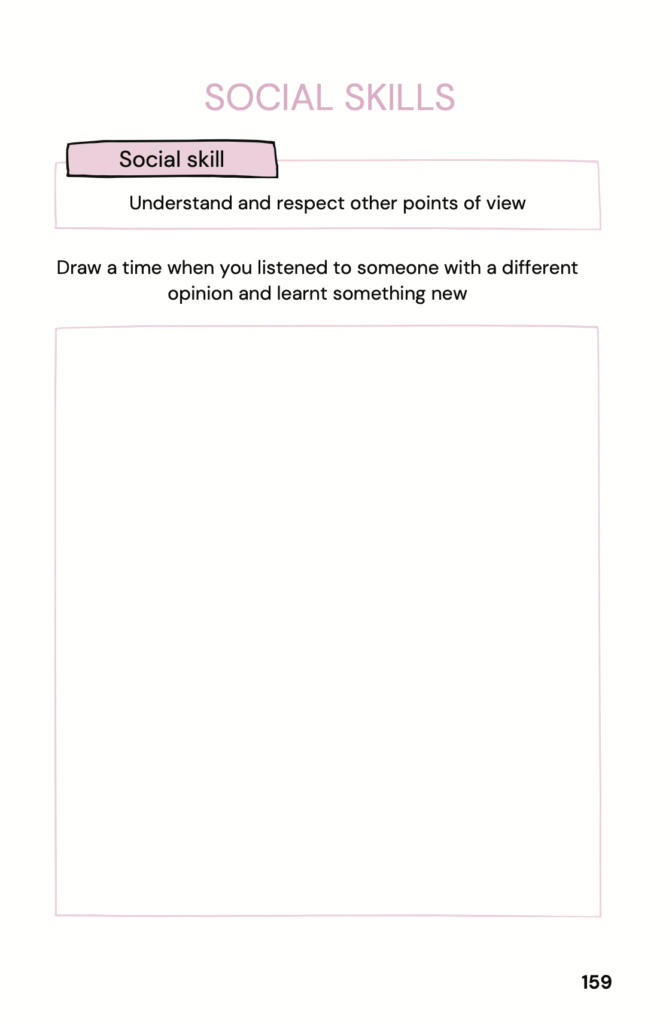
- Draw a time when you listened to someone with a different opinion and learned something new.
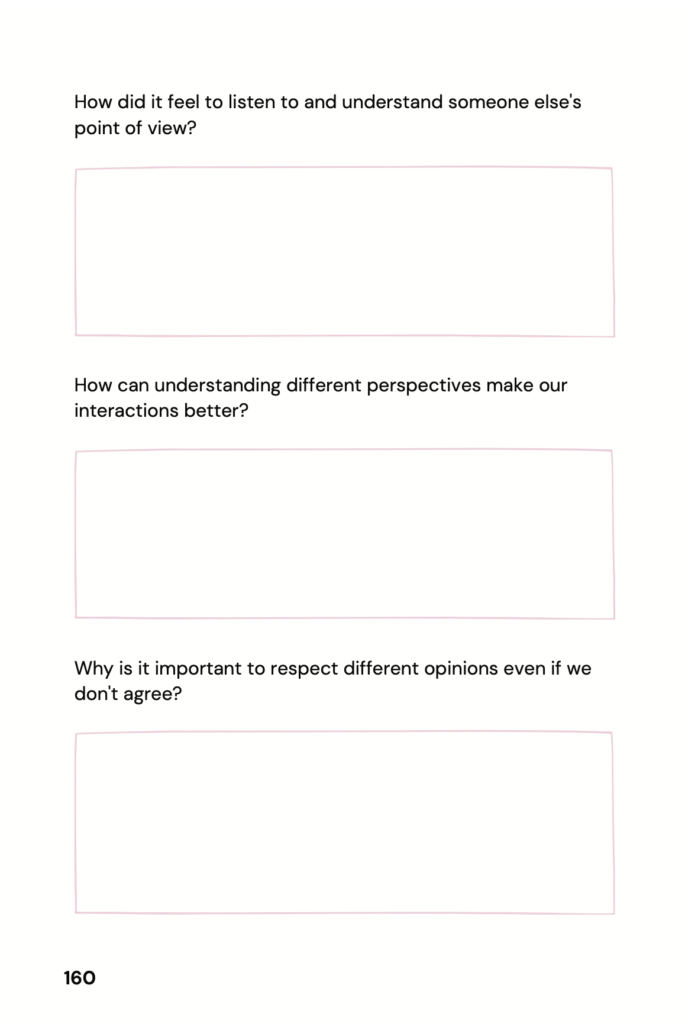
- How did it feel to listen to and understand someone else’s point of view?
- How can understanding different perspectives improve our interactions with others?
- Why is it important to respect different opinions even when we disagree?
These types of reflections help students connect classroom learning to their own experiences and relationships.
More importantly, they make the skill itself visible.
Students begin to recognise that perspective-taking is not simply “being nice” or agreeing with others. It involves:
- listening actively
- considering different experiences
- reflecting before responding
- understanding complexity
- developing empathy and respect
From Content Learning to Human Understanding
When skills like perspective-taking are intentionally integrated into learning, classroom experiences become richer and more meaningful.
Students are not only learning history.
They are learning how to:
- communicate thoughtfully
- navigate disagreement respectfully
- understand complexity
- engage with others more empathetically
These are essential competencies not only for academic success, but also for participation in increasingly diverse and interconnected societies.
Explicit Skills Teaching Matters
One of the central ideas explored in Empowering Future Skills: A Practical Reflection Workbook for Educators is that skills become more powerful when they are intentionally taught, reflected upon, and revisited over time.
Perspective-taking does not develop automatically simply because students work together or discuss ideas in class.
It develops when educators intentionally create opportunities for students to:
- explore multiple viewpoints
- reflect on their own thinking
- practise respectful dialogue
- make connections between learning and real-life interactions
When schools make these skills visible and intentional, students begin to develop deeper understanding not only of academic content, but also of themselves and others.
That is where meaningful learning begins.